

Screen Protector QC, an 8-Point Inspection Checklist
Screen Protector QC, an 8-Point Inspection Checklist
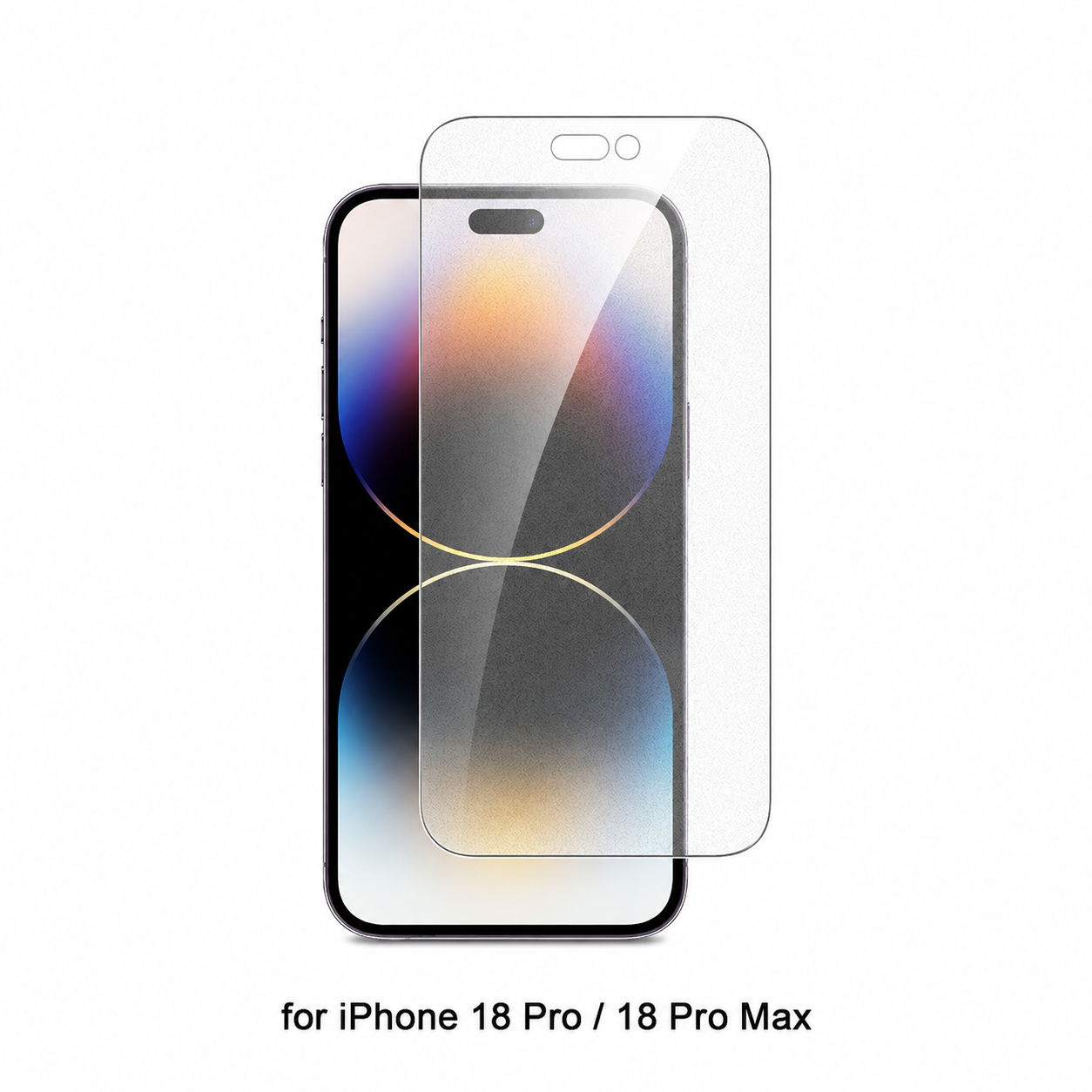
Nearly every dispute in the screen protector trade comes down to one sentence that was never written: what counts as a defect, and how many are allowed. Suppliers say they inspect every piece; buyers say the quality was bad; neither side can point to a clause. This checklist is written for importers who want to close that gap before the first container ships. It sets out how sampling actually works, how to classify defects with numbers instead of adjectives, and the eight inspection points our own outgoing QC covers on every batch of screen protector product. Use it as the basis for a purchase-order clause, not as a general read. The same eight points apply whether you import clear glass for a value line or a coated screen protector for a premium one — only the acceptance numbers change.
First, Understand What "100% Inspection" Means
In most screen protector factories, "100% inspection" means every unit passed under a lamp and was looked at by an operator. It does not mean every unit was measured, tested for adhesion, checked for transmittance, or verified against a drawing. That is not dishonesty — at hundreds of thousands of units a month, dimensional measurement of every piece is economically impossible.
What a serious supplier will tell you is which of three activities they actually perform: 100% visual sort, which removes obvious chips, cracks, and heavy contamination but says nothing about dimensions or coating performance; 100% functional check, testing fit and touch against a device or jig; or sampling inspection, where a statistically defined sample is measured against every specification with accept and reject numbers. The third is the only one that gives you a decision rule you can enforce. "We check everything" gives you no recourse; "sample 200 pieces per lot, accept at five major defects, reject at six" does.
Define Defects With Numbers, Not Adjectives
Defect classification is where a purchase order either works or fails. Write it before the order is placed, not after the container lands. The three-class convention is standard across consumer goods, but the contents must be written for a screen protector:
Critical — a safety risk or a product that cannot be used: through-cracks, unstrengthened glass, a cutout that fully blocks a sensor, a sharp edge that cuts. Accepted at zero, regardless of the AQL applied elsewhere. Major — affects function or is obvious to the end customer: edge chip above the agreed size, a bubble in the active viewing area, a black border overlapping the display, transmittance below the agreed minimum, missing or uneven coating. Typical acceptance AQL 0.65–1.0. Minor — cosmetic only: slight border colour shift, an inclusion at the extreme edge, a scuff on the retail box. Typical acceptance AQL 2.5–4.0.
Now translate each into a measurable statement. "Bad edge" is not a defect; "edge chip longer than 0.3 mm or deeper than one third of the glass thickness" is. "Bad clarity" is not a defect; "transmittance below 90 percent measured on the agreed instrument" is. This translation is the single highest-value half-day a buyer can spend on the category.
The Eight Inspection Points
These are the eight checkpoints we run on every screen protector batch at outgoing QC, and they map cleanly onto an incoming inspection script:
1. Thickness. Verify against the agreed specification — 0.2 mm, 0.26 mm, and 0.33 mm are the common build heights — measured with a caliper on a sampled piece, not inferred from the carton. 2. Dimensions and cutouts. Measure length and width against the approved drawing, then check speaker, camera, and sensor openings. A cutout half a millimetre off-centre can render the product incompatible with its target device. 3. Device fit. Trial-fit on the named model. Every batch should include trial pieces applied to an actual device or a confirmed reference unit, checking that the perimeter does not obscure the display or sensors.
4. Edge finishing. Inspect the rim for chips, sharp points, and uneven polishing. On curved or full-cover designs this check is decisive, because edge quality is what fails first in handling. 5. Coating performance. The practical field test is a water-contact-angle or oil-based marker test: a bead should form and wipe clean on a fresh surface. More rigorous programmes measure the contact angle before use and after abrasion — a common factory standard is an initial angle above 103 degrees, still above 90 degrees after 1,200 back-and-forth strokes with steel wool under a 1 kg load. 6. Optical performance. A clear screen protector should measure at least 90 percent light transmittance with haze at or below 2 percent on a haze meter; anti-glare and privacy finishes are compared against the approved sample instead, because their target is a surface effect, not maximum transmission.
7. Scratch and impact behaviour. Confirm the hardness basis before you accept a 9H screen protector claim — the usual test is a pencil hardness rig at 750 g load. For impact, a common factory acceptance test is a 32 g steel ball dropped from 60 cm onto the centre of the piece with no cracking; larger programmes may specify a heavier ball or greater height, so write the number you require. 8. Adhesion and bubble behaviour. Apply a sample to a clean device from the centre outward and watch for trapped dust, edge lift, and slow-forming bubbles under the release liner. Bubbles that appear before the liner is removed indicate a lamination problem and are a major defect, not a handling artefact.
Packing, Labels and Batch Traceability
Clean-looking screen protector packs hide chipped glass, trapped dust, and mixed device models more often than any other defect. Check that the model number printed on the retail pack matches the actual cutout inside, that the barcode scans against your listing, that the instructions are in the right language for the market, and that inner and outer carton marks match the packing list. A screen protector claim is only as strong as the physical evidence attached to it, so record defects by batch number and keep the sampled units — a claim is only as strong as the physical evidence attached to it, and batch-level records let you isolate a single production run instead of condemning a whole supplier relationship.
For apparel-style multi-model ranges, confirm the assortment arithmetic too: units per pack, packs per carton, and the model mix against the purchase order. Assortment errors are cheap to fix at the factory and expensive to fix in your warehouse. Photograph the first carton opened at your own dock and file it with the batch record; it takes a minute and settles most short-shipment arguments before they start.
A Clause You Can Paste Into a Purchase Order
The wording that prevents most disputes reads roughly like this: critical defects accepted at zero; major defects at AQL 0.65; minor defects at AQL 2.5; sampling per ISO 2859-1 at general inspection level II; thickness, dimensions, cutouts, transmittance, and contact angle measured on the sampled pieces against the approved drawing and golden sample; trial fit on the named device model included in every lot; defects recorded by batch with photographic evidence; and the approved sample held by both parties as the reference standard. Add the specific numbers you care about — edge chip size, minimum transmittance, drop test parameters — because a clause without numbers is a preference, not a specification.
Buyers building a full accessory line should run the same discipline across every screen protector finish in the range; our screen protector catalogue lists the clear, privacy, anti-blue, anti-glare, anti-bacterial, and camera lens constructions that the checklist above is written around.
Frequently Asked Questions
What AQL should I set for screen protectors?
Zero for critical defects, 0.65–1.0 for major defects that affect function or are obvious to the customer, and 2.5–4.0 for cosmetic minor defects. Tighter numbers on major defects are what protect your returns rate; loosening minor defects keeps the price realistic.
How many pieces should be trial-fitted from each batch?
Three trial fits per batch is a workable minimum for a standard model, applied to the actual device or a reference unit. For a new model's first production run, increase the sample and fit each variant — clear, privacy, matte — because coating and thickness changes affect fit and touch response.
Is a 9H claim on a screen protector enough to judge scratch resistance?
No. 9H refers to a pencil-hardness test at a defined load, which measures surface scratch resistance, not impact strength or coating life. Ask for the pencil load, the coating type, and any abrasion cycling data alongside the rating.
What is the fastest field check for screen protector coating quality?
An oil-based marker line or a water droplet on the surface: on a good coating the line beads and wipes away cleanly, and the droplet sits proud. If either spreads or smears on a fresh piece, the coating is uneven or missing — check the rest of the lot before releasing it.
-
 Privacy Glass Protector: Safeguarding Your Digital PrivacyNov,15,2023
-
 Anti-blue Glass ProtectorMay,16,2024
-
 Clear Glass Protector: Shielding Your Device with TransparencySep,14,2023
-
 Anti-glare Glass ProtectorJun,06,2024
-
Privacy Glass Protectors: Safeguarding Your Screen and Your PrivacySep,14,2023


 Links


